
Facility Management
Preventive Maintenance Programs for Commercial Buildings
A preventive maintenance program is the single biggest lever you have over what a commercial building costs to run. Buildings that operate on a written PM schedule have fewer emergency calls, longer equipment life, and predictable budgets. Buildings that run equipment to failure pay for the same work later, at emergency rates, with tenants watching.
Levaru designs and runs commercial building preventive maintenance programs across Virginia, Washington DC, and Maryland as part of our facility management service. Every task is scheduled, dispatched, and photo-documented on our own platform, so you never have to take our word that the work happened.
What a Commercial Building Preventive Maintenance Program Covers
A real PM program is built around the specific equipment in your building, asset by asset. These are the classes we cover and what the work actually looks like.
HVAC
Rooftop units, split systems, boilers, chillers, pumps, and exhaust fans get scheduled filter changes, belt and bearing inspections, coil cleaning, refrigerant checks, condensate line clearing, and seasonal changeover service. HVAC is where deferred maintenance shows up first, usually as a no-cool call in July. Our HVAC maintenance page covers this scope in detail.
Electrical
Annual panel inspections, breaker exercising, and torque checks on connections. Infrared scans of panels and switchgear find hot spots from loose lugs and failing breakers before they become outages or fires. Emergency lighting and exit signs get monthly function tests.
Plumbing
Water heater flushes and anode checks, sump pump testing before the wet season, valve exercising so shutoffs actually turn when you need them, and annual backflow preventer testing where the jurisdiction requires certified reports.
Roof and building envelope
Spring and fall roof inspections: drains and scuppers cleared, membrane seams and penetrations checked, flashing and sealant reviewed. Envelope walks catch failed caulk joints, masonry cracks, and door and window seal failures before water gets into the wall.
Life safety and elevators
Fire alarm testing, sprinkler inspections, and extinguisher service run on code-mandated schedules through licensed vendors, with certificates filed in your building record. Elevator maintenance stays with a qualified elevator contractor; we manage the contract, track the visits, and keep the inspection certificates current.
How the PM Schedule Gets Built
We do not hand you a generic checklist. The schedule for your building comes from three inputs, in order.
Manufacturer intervals come first. The maintenance tables in the equipment documentation are the baseline, and skipping them can void warranties on newer equipment.
Runtime and conditions adjust the baseline. A rooftop unit running 24/7 over a data room needs shorter intervals than the same unit over a storage floor. Filters near a loading dock load up faster than filters on the top floor.
Criticality sets the priority. Equipment whose failure closes your building or a tenant space gets tighter intervals and spare parts identified in advance. Equipment with built-in redundancy can run longer between visits.
What Should a Commercial Preventive Maintenance Checklist Include?
At minimum: quarterly HVAC service with filter changes, annual electrical panel inspection with an infrared scan, semi-annual plumbing checks including water heaters and backflow devices, spring and fall roof inspections, monthly life-safety checks, and code-mandated fire and elevator inspections through licensed vendors. Anything less leaves a major failure mode uncovered.
From there, the checklist should expand to match your building: garage door and gate operators, irrigation winterization, dock levelers, kitchen exhaust in food-service spaces, and whatever else can fail expensively. The right checklist is an inventory of your actual assets with a frequency next to each one.
A preventive maintenance checklist is only as good as its proof. A task without a timestamp and a photo is a task you cannot verify happened.
QR Asset Tags and Photo-Documented Work Orders
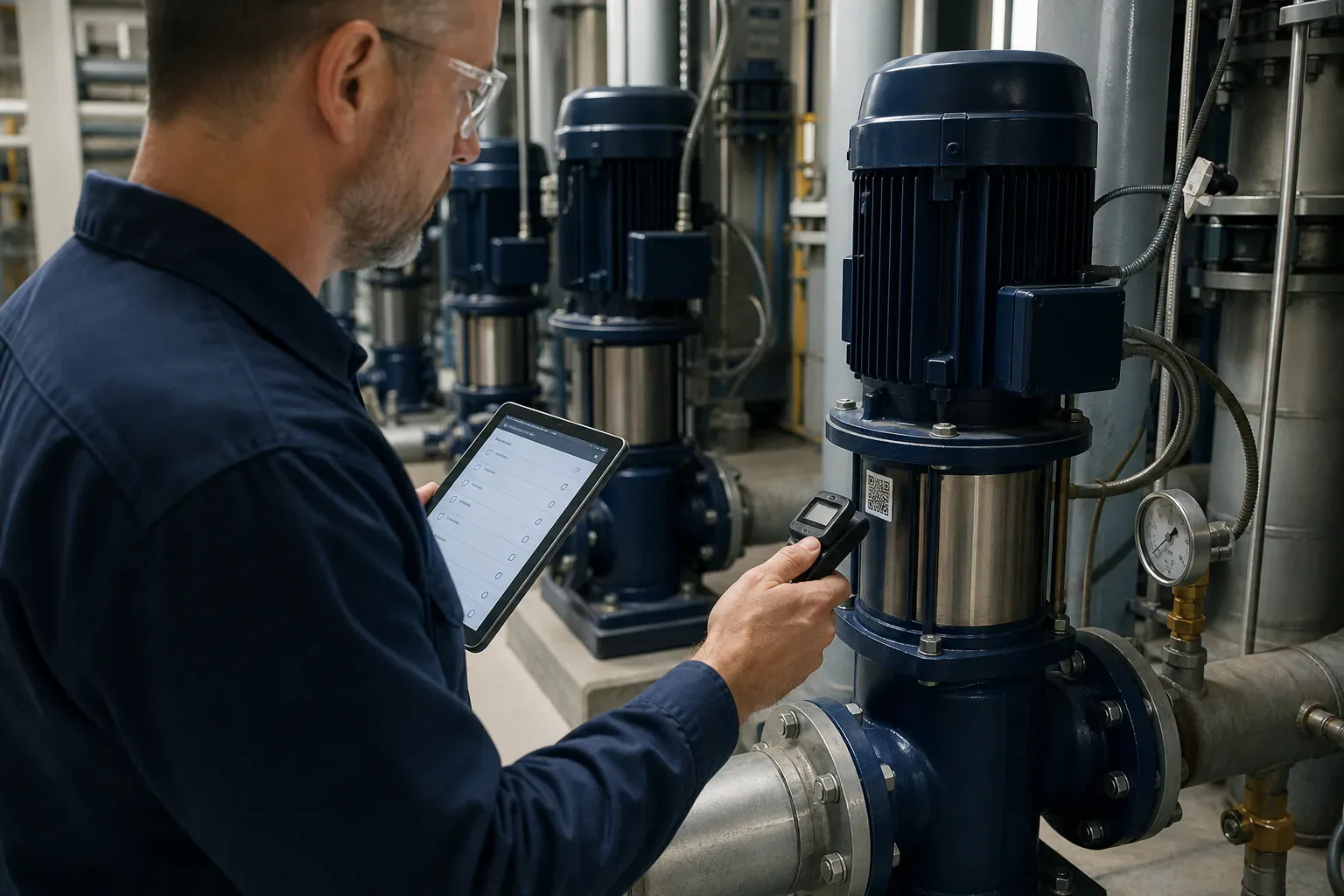
When Levaru takes on a building, we tag every major asset with a QR code and load it into our CMMS platform. A technician scans the tag, sees the full service history, completes the task list, and closes the work order with photos.
You see all of it in the client portal: what is scheduled, what was completed, what it looked like before and after, and what the technician flagged for follow-up. No monthly PDF summary you have to trust. The record is live.
The Deferred Maintenance Spiral
Deferred maintenance compounds. A skipped filter change loads the blower motor, the motor draws more current and runs hotter, the unit short-cycles, and eighteen months later you are replacing a compressor that scheduled service would have protected. Industry studies consistently find that reactive repair costs a multiple of the same work done on a planned basis, and that is before you count tenant disruption and lost equipment life.
Rule of thumb: if work only happens after something breaks, you are not maintaining the building. You are financing its decline at emergency rates.
The spiral runs the other direction too. Each completed PM cycle produces condition data, and condition data is what lets you replace equipment on your schedule instead of the equipment’s.
PM Data Feeds Capital Planning
Every work order adds to the history on each asset: repair frequency, parts consumed, condition notes. Over time that record tells you which rooftop unit is worth another compressor and which one should be in next year’s capital budget.
That is how PM connects to projects and construction. Instead of an emergency replacement quoted under pressure in August, you get a planned project, competitively bid, scheduled for shoulder season. If an emergency does get through, our 24/7 emergency response team is the backstop, but the point of a good PM program is that they hear from your building rarely.
If your building is running without a written PM schedule, that is the place to start. Send us the address and we will scope a program around the equipment you actually have.
FAQ
Preventive Maintenance — common questions
What is preventive maintenance in a commercial building?
Preventive maintenance is scheduled, recurring work performed on building equipment before it fails: filter changes, belt inspections, coil cleaning, panel scans, valve exercising, and similar tasks done on a calendar or runtime interval. The goal is to catch wear early, extend equipment life, and reduce the emergency repairs that come from running equipment to failure.
How often should commercial HVAC equipment be serviced?
Most rooftop units and split systems need quarterly attention at minimum, with filter changes as often as monthly depending on occupancy and outdoor conditions. Heating equipment should be inspected before the heating season and cooling equipment before summer. Manufacturer intervals are the starting point; runtime hours and how critical the unit is to your operation adjust the schedule from there.
Is a preventive maintenance contract worth the cost?
For most commercial buildings, yes. Planned work is cheaper per task than emergency work because it is scheduled during normal hours, parts are ordered ahead, and small problems are fixed before they cascade. Industry studies consistently find reactive maintenance costs several times more than the same work done on a planned basis, and that gap ignores tenant disruption and premature equipment replacement.
What does a preventive maintenance program include for a small office building?
At minimum: quarterly HVAC inspections with filter changes, annual electrical panel inspection, semi-annual plumbing checks including water heaters and backflow preventers where required, roof inspections in spring and fall, monthly life-safety checks such as exit lighting, and annual fire alarm and extinguisher service through licensed vendors. Levaru scopes each program to the actual equipment in your building, not a generic template.
How do I know preventive maintenance work was actually done?
Every Levaru PM task is a work order in our platform with before-and-after photos, a timestamp, and the technician who completed it. Each major asset carries a QR tag, so its full service history is attached to the equipment itself. You can open the client portal at any time and see exactly what was done, when, and what it looked like.
Next step
Tell us about your building. We'll show you what we'd do with it.
Curious how it works? See how our 3D walkthroughs work →