
Facility Management
Facility Compliance Inspections in the DMV
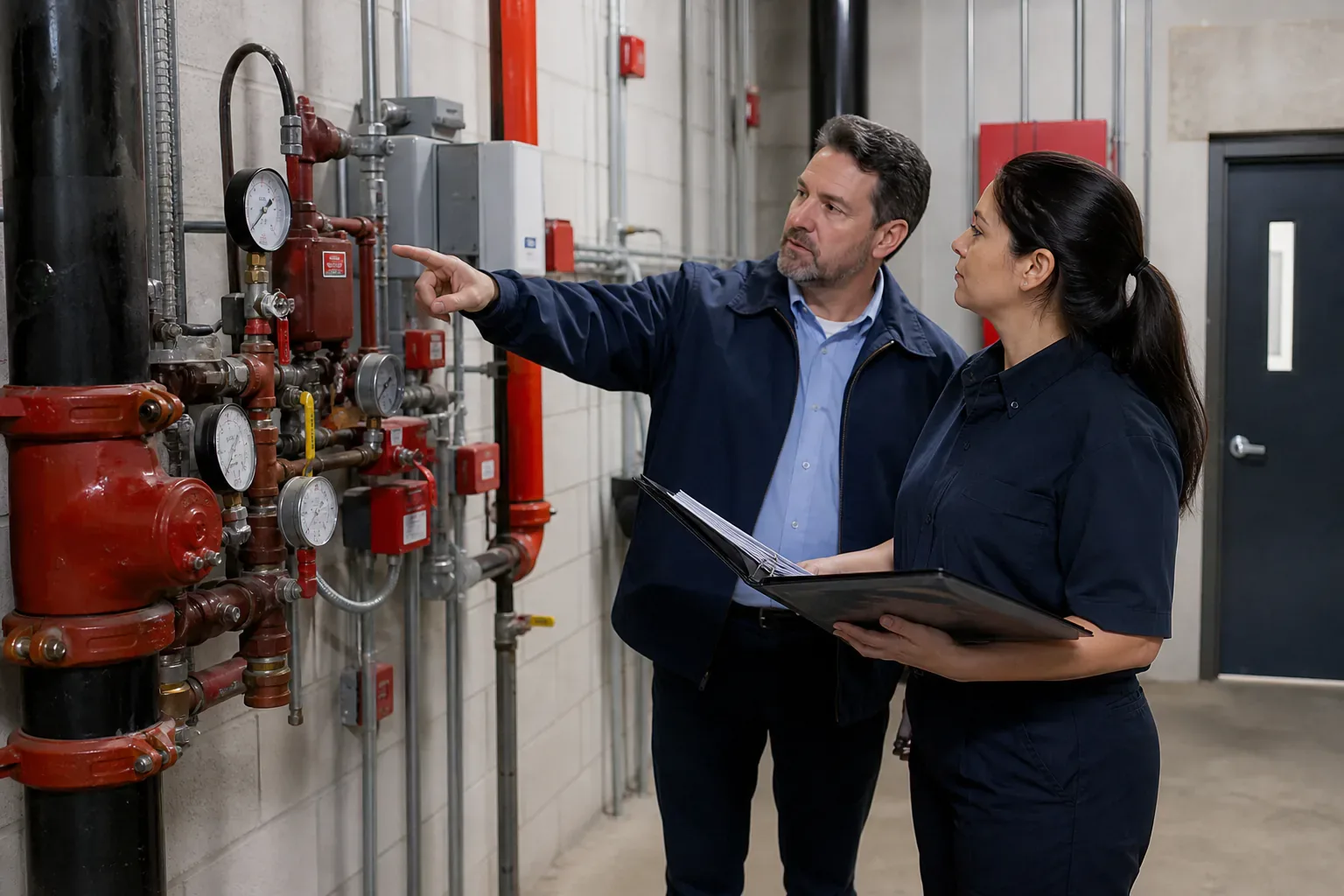
Every commercial building carries a calendar of legally required inspections — fire alarm, sprinkler, elevator, backflow, generator, extinguishers — and in most buildings that calendar exists nowhere. Each system gets inspected whenever its contractor calls, deficiency reports land in an inbox and stop there, and nobody discovers the gaps until a fire marshal, an insurance auditor, or an incident finds them first. Levaru runs compliance for commercial buildings across Washington DC, Northern Virginia, and Maryland as a managed program: one inventory, one calendar, certified inspectors scheduled and escorted, and every report and correction documented in your client portal.
Compliance is not a stack of certificates. It is a loop — inspect, find, fix, re-inspect, file — and the loop is the deliverable.
The Inspection Calendar Nobody Hands You
No agency mails you the consolidated list of what your building owes. It has to be assembled from what is actually installed, and that is where we start: during onboarding we inventory every system with a code-required inspection cycle and build the master calendar. For a typical commercial building it looks like this:
- Fire alarm systems — annual testing per NFPA 72 by a licensed fire alarm contractor
- Sprinkler and standpipe systems — quarterly and annual inspections per NFPA 25, with five-year internal obstruction inspections most owners have never heard of until they’re overdue
- Fire pumps — weekly/monthly churn tests and an annual flow test where a pump exists
- Elevators and lifts — periodic inspections and current operating certificates per jurisdiction
- Backflow preventers — annual certified tests filed with DC Water, WSSC Water, or the local Virginia utility, coordinated with our plumbing program
- Emergency and exit lighting — monthly function tests and the annual 90-minute discharge test, run with our electrical services crew
- Generators and transfer switches — monthly exercising and annual load testing where standby power exists
- Fire extinguishers — annual service tags, plus hydrostatic testing on their longer cycles
- Kitchen hood suppression and grease ducts — semiannual cycles wherever a food-service tenant cooks
Buildings with special conditions — high-rises, assembly occupancies, medical tenants — carry additions, which is precisely why the inventory comes before the calendar.
Deficiencies Are Where Compliance Programs Die
The inspection is the easy half. Every inspection produces findings, and findings are where most buildings quietly fail: the sprinkler contractor’s deficiency list goes into an email thread, the repair never gets scheduled, and next year’s inspection finds the same items — now with a paper trail proving the owner knew.
In our program every deficiency becomes a work order with an owner and a deadline the moment the report lands. Corrections are photographed, re-inspections scheduled, and the closed loop is visible in the client portal next to the original finding. The difference matters legally as much as operationally: a documented finding with a documented correction is a functioning safety program; a documented finding with silence after it is evidence.
An inspection you failed and fixed protects you. An inspection you skipped prosecutes you.
What We Find When We Take Over a Building
The pattern in newly onboarded buildings is consistent enough to predict: the fire alarm and extinguisher tags are current, because those contractors chase the renewal revenue. Beyond that, entropy — an elevator certificate that expired quietly, a sprinkler system that has never had its five-year internal obstruction inspection, backflow assemblies the water utility has been sending letters about to an address nobody checks, and a generator that gets exercised whenever someone remembers. None of it reflects negligence so much as the absence of an owner for the calendar. The onboarding audit establishes the true state of every system in the first weeks, and the findings are triaged the same way we triage everything: life safety first, enforcement exposure second, everything else scheduled.
Three Jurisdictions, Three Rulebooks
The DMV is one market with three regulatory regimes. DC, the Maryland counties, and the Virginia cities and counties each adopt their own code editions, set their own filing and certificate procedures, and enforce on their own rhythms — the same rooftop equipment can carry different paperwork obligations on opposite sides of the Potomac. For owners with buildings in more than one jurisdiction, the compliance calendar has to be built per building, not copied across the portfolio. That is how we run it, and it is one of the quiet advantages of a manager whose entire footprint is this region.
Documentation Is the Product
The moments compliance records actually get read: an insurance audit, a lender or buyer’s due diligence, a fire marshal visit, and the aftermath of an incident. In all four, speed and completeness change outcomes. Our clients’ records live in one place — reports, certificates, correction photos, dates — attached to QR-tagged assets and retrievable in minutes, not in a basement filing cabinet or a departed manager’s inbox. Due diligence requests that traditionally take weeks of scrambling close in an afternoon, and the building that can produce its records instantly is the building the auditor trusts.
Compliance also feeds the rest of the operation: findings inform the preventive maintenance calendar, life-safety systems get first priority in emergency response planning, and inspection history becomes part of the asset record that drives repair-versus-replace decisions.
If you cannot say with confidence when your sprinkler system’s five-year internal inspection was last done — or whether your building has ever had one — that is a normal starting point. Request a proposal and the first deliverable is the inventory and the calendar your building has been missing.
FAQ
Compliance Inspections — common questions
What inspections is a commercial building required to have?
The core list for most commercial buildings: fire alarm system testing (annually, per NFPA 72), sprinkler system inspections (quarterly and annually, per NFPA 25), fire extinguisher annual service, elevator periodic inspections and certificates, backflow preventer annual testing filed with the water utility, emergency and exit lighting tests, and generator testing where standby power exists. Buildings with commercial kitchens add hood suppression and duct cleaning on semiannual cycles. The exact schedule depends on your systems and your jurisdiction, which is why the first step is building the inventory.
Who actually performs these inspections?
Licensed and certified specialists, almost always: fire alarm and sprinkler contractors, state-certified elevator inspectors, certified backflow testers. That is exactly why compliance fails in most buildings — no single vendor owns the calendar, so each system is inspected whenever its contractor happens to call. Levaru owns the calendar. We schedule the certified vendors, escort them, capture the reports, track the deficiencies to closure, and keep the records where you and your insurer can find them.
What happens if a required inspection is missed or failed?
Missed inspections surface at the worst moments: a fire marshal visit, an insurance audit, a lender or buyer due-diligence review, or after an incident, when the absence of records becomes a liability multiplier. Consequences range from citations and fines to shutdown orders on elevators and, most expensively, contested insurance claims. A failed inspection is far less dangerous than a missed one, provided the deficiency is corrected and re-inspected on record — failure with documented correction is a working compliance program.
Do requirements differ between DC, Maryland, and Virginia?
Yes. The national standards (NFPA, elevator safety codes) are broadly shared, but each jurisdiction adopts its own editions, schedules, filing requirements, and enforcement style — DC, each Maryland county and WSSC territory, and each Virginia city or county run their own programs. A portfolio that spans the DMV can face three different filing regimes for the same equipment type. We track requirements per building and per jurisdiction, so the calendar reflects where the building actually is.
What does a compliance program cost?
The inspections themselves are priced by the certified vendors per system — a fire alarm test, an elevator certificate, a backflow test each carry market rates. What Levaru adds is the management layer: the inventory, the calendar, vendor scheduling and escorting, deficiency tracking, and the documentation archive, folded into the facility management fee. For most owners the program pays for itself the first time a deficiency is caught on schedule instead of by an incident, or the first insurance audit that closes in a day because the records were one login away.
Next step
Tell us about your building. We'll show you what we'd do with it.
Curious how it works? See how our 3D walkthroughs work →