
Facility Management
Commercial Electrical Services in the DMV
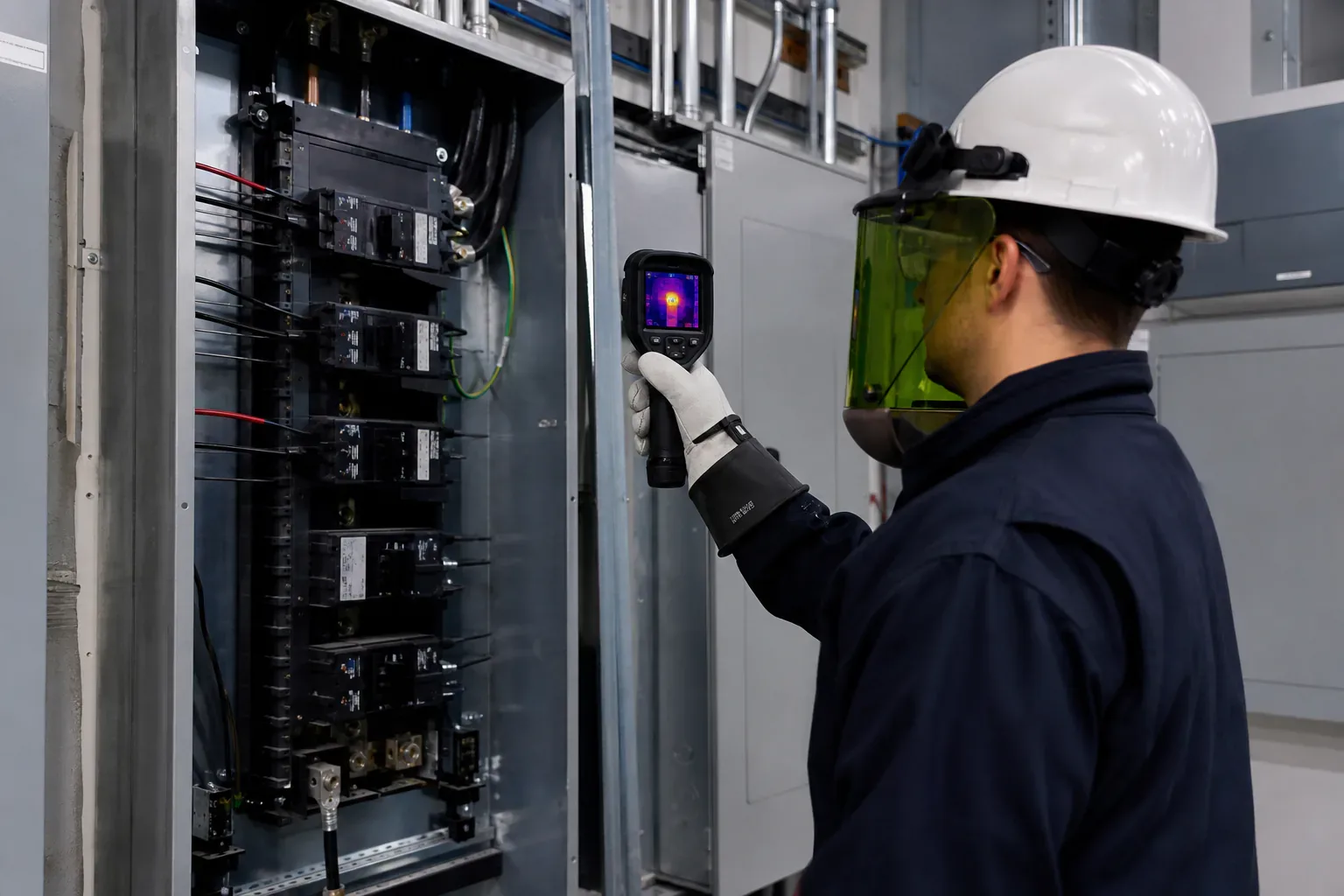
Electrical is the building system owners think about least and depend on most. Nothing in your building runs without it, most of it is hidden behind panel covers and ceiling tiles, and the failure modes range from a dark hallway to a genuine fire risk. Levaru runs the electrical side of commercial buildings across Washington DC, Northern Virginia, and Maryland as part of an integrated facility management program: routine maintenance by our own technicians, licensed electrical contractors managed under our supervision for regulated work, and every task photo-documented in your client portal.
The result is one system of record for a trade where most buildings have none.
What We Self-Perform and What Licensed Electricians Handle
Honesty about scope is a feature here, because electrical work is regulated for good reasons. Our facility technicians handle the recurring layer: lamp, ballast, and driver replacement, exit and emergency lighting testing, breaker resets with the cause logged and investigated, GFCI and receptacle testing, visual inspections of panels and electrical rooms, and keeping panel schedules legible and true.
Work inside panels, new circuits, service and distribution equipment, and anything requiring permits is performed by licensed electrical contractors — vetted, scheduled, and supervised by us, working from the same work-order system as our own crews. You see one program and hold one company accountable; the licensing requirements are met behind the scenes without you managing another vendor relationship.
The Electrical Preventive Maintenance Program
Electrical systems fail at connections, and connections fail slowly. A real preventive maintenance program for commercial electrical looks like this:
- Annual infrared thermographic scan of panels, disconnects, and switchgear under load, with hot spots documented and corrected
- Annual inspection of main distribution equipment by a licensed electrician: torque checks, cleaning, and exercise of breakers that otherwise sit untouched for decades
- Monthly function test of exit signs and emergency lighting, plus the annual 90-minute battery discharge test the fire code expects
- Generator exercising and transfer-switch testing where standby power exists, with run logs kept per unit
- Lighting sweeps on a schedule, so common areas are relamped in batches instead of one dark fixture at a time
- Panel schedule verification whenever a space turns over — after a few tenant fit-outs, an unverified schedule is fiction
Every item closes with photos and notes in the client portal, tied to QR asset tags on the equipment itself. When a licensed electrician opens a panel in your building, the record of what was found and torqued lives with the asset, not in a contractor’s truck.
Aging DMV Buildings, Modern Electrical Loads
A large share of the commercial stock in DC, Arlington, Alexandria, and the close-in Maryland suburbs was wired for a different era of loads. Then came dense workstation power, server and telecom closets in spaces designed as storage, EV chargers appearing in parking garages, and the humble space heater army that marches in every November.
The symptom set is predictable: nuisance trips in winter, warm panels in summer, and no spare capacity when a tenant wants to build out. Before a fit-out or an EV charging conversation gets serious, the panel schedules and actual measured loads need to be real numbers — which is why electrical capacity review is part of how we scope tenant improvements rather than a surprise discovered mid-project.
A breaker that trips twice deserves an investigation. A breaker that gets reset twice a month without one is a fire investigation waiting for its start date.
Lighting: The Cheapest Electrical Win in the Building
Lighting is where electrical maintenance and energy strategy meet. LED retrofits cut consumption, slash relamping labor, and improve how the building shows — and garage and exterior lighting retrofits double as safety and security upgrades, because a bright garage is a safer garage. Utility rebate programs across DC, Maryland, and Virginia routinely improve the payback. We treat lighting as a managed program: audit what is installed, retrofit where the math works, then maintain by scheduled sweeps. The consumption side connects to our broader energy management work.
When the Power Actually Fails
Storm outages, utility faults, and single-building failures all land the same way: dark tenants and a phone that will not stop. Our 24/7 emergency response team handles electrical emergencies with a triage discipline — life safety first, then isolate the fault, then restore what can be restored safely, with licensed electricians dispatched for anything beyond safe operating limits. Buildings on our program have an advantage before anyone arrives: labeled panels, current one-lines where they exist, and equipment history in the portal instead of in a retired engineer’s memory.
How Commercial Electrical Services Are Priced
The recurring layer — testing, sweeps, inspections — is typically folded into the monthly facility management fee, scoped from the building’s equipment list. Licensed trade work is quoted per project or handled time-and-materials under negotiated rates, with our supervision included rather than marked up in the dark. Retrofit projects like LED conversions are quoted with the rebate and payback math shown, so the decision is financial rather than rhetorical.
If your panel schedules haven’t been verified since the building changed hands, that is a normal starting point — building the real equipment list is the first thing we do. Request a proposal and we’ll start with what’s actually behind the panel covers.
FAQ
Electrical Services — common questions
Can a facility management company do electrical work, or do I need a licensed electrician?
Both, and the line between them matters. Routine electrical maintenance — lamp and driver replacement, breaker resets with cause investigation, exit and emergency light testing, GFCI testing, visual panel inspections — is standard facility technician work. Anything involving panel interiors, new circuits, service equipment, or code-required installation work must be performed by licensed electricians. Levaru handles the routine layer with our own technicians and manages licensed electrical contractors for the rest, under one work-order system and one point of accountability.
How often should commercial electrical systems be inspected?
A defensible baseline: monthly function tests of exit and emergency lighting with an annual 90-minute discharge test, annual infrared thermographic scanning of panels and switchgear under load, annual inspection and exercising of the main distribution equipment by a licensed electrician, and monthly generator exercising where standby power exists. On top of that, every facility technician visit should treat flickering fixtures, warm cover plates, and nuisance trips as findings to log, not annoyances to ignore.
Why do breakers in my building keep tripping?
The usual suspects, in order: circuits overloaded by loads that grew over years of tenant churn (space heaters are the classic winter culprit), loose terminations that heat up and weaken the breaker, aging breakers that drift out of spec, and genuine faults in equipment or wiring. A tripping breaker is a symptom worth diagnosing, not resetting on repeat — repeated resets into a real fault is how electrical fires start. We investigate the cause, and if the answer is a loaded-up circuit, that finding feeds a capacity conversation rather than a bigger breaker.
What is infrared thermographic inspection and why does it matter?
An IR camera scan of energized panels, disconnects, and switchgear that finds hot spots — loose lugs, corroded connections, overloaded phases — while they are still maintenance items instead of outage causes. Loose connections do not announce themselves; they cook quietly until something fails, usually under summer load. Many property insurers ask about IR scanning for exactly this reason. It is the single highest-value hour you can spend on a commercial electrical system each year.
Is an LED lighting retrofit worth it in a commercial building?
Almost always, and the math is simple enough to check: LED retrofits typically cut lighting energy use by half or more, cut lamp-replacement labor dramatically because of longer life, and often qualify for utility rebates in DC, Maryland, and Virginia. Payback for common office and garage retrofits usually lands in the two-to-four-year range depending on run hours. Garage and exterior lighting is the best place to start — long run hours, safety benefit, and the ugliest maintenance access.
Next step
Tell us about your building. We'll show you what we'd do with it.
Curious how it works? See how our 3D walkthroughs work →