
Property Management
Industrial & Warehouse Property Management in the DMV
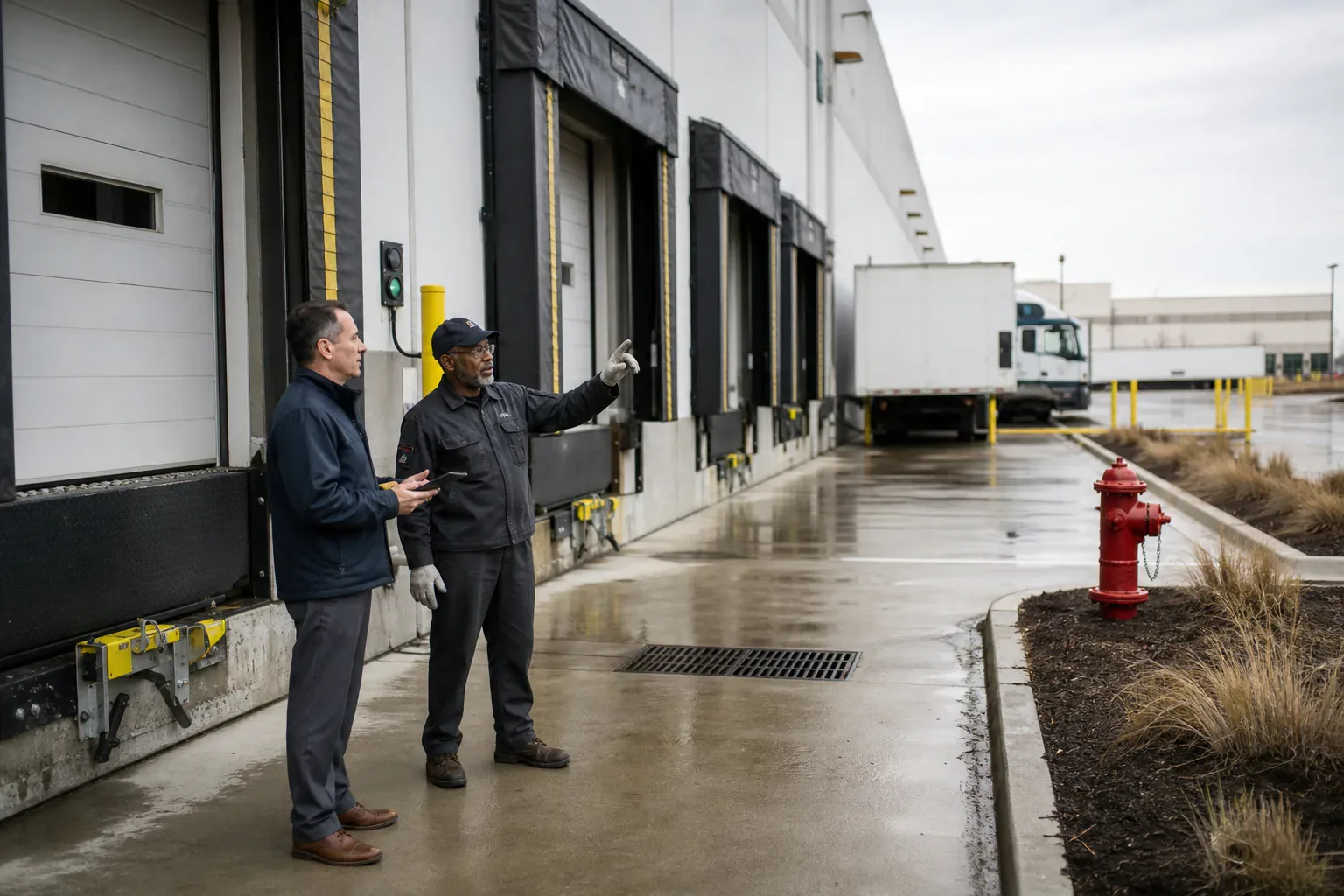
Industrial property looks like the easiest asset class to manage until the roof leaks over a tenant’s inventory or a fire inspection lapses. It is low-touch in the sense that a well-run warehouse does not generate daily drama, and high-stakes in the sense that the few things that do go wrong are expensive and sometimes dangerous. Levaru manages industrial and warehouse property across Northern Virginia, Washington DC, and Maryland as part of an integrated operation, backing every management agreement with our own facility management crews rather than a list of vendors.
The discipline that fits this asset class is preventive and documented. You protect the envelope, enforce the lease, and keep a clean record — so that when something does happen, you already know the roof’s history and the tenant’s obligations instead of discovering both in a crisis.
The industrial asset: what actually breaks, and what it costs
The systems that carry risk in an industrial building are few and large. The roof is the biggest single exposure — flat, expansive, and directly over whatever the tenant stores. Paving and truck courts take a beating from loaded trailers and fail expensively when neglected. Dock levelers, seals, and overhead doors are safety-critical and used hundreds of times a day. Fire suppression is a life-safety and compliance obligation that does not forgive lapses.
We build the preventive program around exactly these systems. Semiannual roof inspections with documented findings, dock-equipment servicing, pavement and drainage monitoring, and scheduled compliance inspections of fire and life-safety systems form the backbone. Electrical capacity is the sleeper item: buildings wired for an earlier generation of use now feed dense racking, refrigeration, battery-charging rooms, and fleet or EV charging, so verifying the service and panel loads before a tenant expands is part of protecting both the asset and the lease. Every inspection closes with photos and notes tied to QR-coded asset tags in the client portal, so the roof that was patched in March is on the record, not in someone’s memory.
Industrial management is low-drama by design. The quiet is manufactured — it is what a maintained roof and an enforced lease produce.
Triple net leases and the maintenance responsibility line
Industrial leases lean heavily toward net structures, and the exact split of who maintains what varies enormously from deal to deal. A true triple net can put the roof, HVAC, and even structural elements on the tenant; a modified net keeps the big-ticket items with the landlord and recovers operating costs. The expensive fights are always about the roof, the HVAC units, and structural repairs.
We abstract every lease at takeover so the responsibility line is documented, not assumed. That matters in both directions: it stops the owner from paying for repairs the tenant owes, and it stops genuine capital items from being deferred because each party quietly assumed the other had it. Where the tenant is responsible, we still verify the work is actually being done, because the building reverts to the owner at lease end in whatever condition the tenant left it. Our lease administration team handles this abstraction discipline for every managed building.
Fire, life safety, and the licensed-trade line
Fire suppression, alarm systems, and specialty work are regulated, and we are honest about the line. Routine monitoring, visual inspection, and coordination are handled by our own people; sprinkler certification, alarm testing, and any licensed trade work are performed by vetted, licensed contractors managed under our supervision and working from the same work-order system as our crews. The owner sees one program and holds one company accountable, while the licensing requirements are met properly behind the scenes.
Documentation for owners who are not on site
Industrial owners are frequently institutional, out-of-market, or simply not inclined to drive to a distribution building every month. The Levaru platform is built for exactly that owner. Beyond photo-documented work orders and asset histories, every managed building is captured in browser-based 3D walkthroughs with 360-degree documentation of roof areas, dock lines, mechanical rooms, and truck courts. An owner or asset manager anywhere can verify the physical condition of the asset from a laptop, which is the honest antidote to deferred maintenance hiding in a building nobody visits.
Documented condition also protects value at the transaction. When an industrial asset trades or refinances, a clean maintenance record and a current physical baseline shorten diligence and remove the arguments that come from undocumented deferred work.
Getting started on an industrial assignment
Takeover begins by reading the leases and walking the building. We abstract the maintenance-responsibility structure, inventory the roof, docks, paving, and fire systems, establish a documented physical baseline, and build a preventive schedule scoped to the systems that carry real risk here — not a generic checklist borrowed from office work.
If you own industrial or warehouse property in Northern Virginia, Washington DC, or Maryland, call +1 (703) 646-8300 or write info@levaru.co. We will walk the building, read the leases, and put a specific scope and fee in writing.
FAQ
Industrial Property Management — common questions
What does industrial property management involve day to day?
Less daily foot traffic than office or retail, and higher stakes on a handful of systems. The core job is protecting the building envelope and the site — roof, paving, dock equipment, and fire suppression — while enforcing the lease language that assigns maintenance responsibility between landlord and tenant. Much of the value is preventive and documented rather than reactive: catching a roof issue before it reaches inventory, keeping dock levelers safe, and making sure the fire system is inspected and current. On a well-run industrial asset, a quiet month is the product, not a sign that nothing is happening.
Under a triple net lease, what maintenance is the landlord vs the tenant responsible for?
It depends entirely on the lease, which is exactly why abstracting it matters. Industrial leases range from true net structures where the tenant maintains almost everything including the roof and HVAC, to modified nets where the landlord keeps the roof, structure, and parking lot and recovers other costs. The most common and expensive disputes involve the roof, the HVAC units, and structural repairs. We abstract each lease at takeover and manage to what the document actually says, so the right party pays and capital items are never quietly deferred because both sides assumed the other was responsible.
How often should a warehouse roof be inspected?
At minimum twice a year — typically spring and fall — plus after any major storm. Industrial roofs are large, flat, and cover valuable inventory, and their failure mode is a slow leak that damages goods before anyone notices from the ground. Semiannual documented inspections catch ponding, failing seams, blocked drains, and flashing problems while they are still maintenance items. On a triple-net building where the tenant is responsible for the roof, the landlord still has an interest in verifying the roof is actually being maintained, because the asset reverts at lease end.
What building systems matter most in industrial buildings?
In rough order of consequence: the roof, the fire suppression system, the loading docks and levelers, the paving and truck courts, and the electrical service feeding modern racking, refrigeration, or equipment. These are the systems whose failure stops the tenant from operating or exposes the owner to real liability. Warehouse HVAC is often minimal, but where a tenant runs climate-controlled or refrigerated space, that becomes critical too. We build the preventive maintenance program around the systems that actually carry risk in this asset class rather than a generic office checklist.
How is industrial property management priced?
Usually a percentage of collected rent with a monthly minimum, or a flat fee for a single-tenant net-leased building where the workload is narrow and steady. Industrial assets are often lower-touch than multi-tenant office or retail, which the fee should reflect, but the capital items are large, so the value is in disciplined oversight rather than daily presence. We quote after seeing the building, the rent roll, and the lease structure, because a single-tenant net-leased distribution box and a multi-tenant flex park are entirely different jobs.
Next step
Tell us about your building. We'll show you what we'd do with it.
Curious how it works? See how our 3D walkthroughs work →