
Facility Management
Commercial Plumbing Services in the DMV
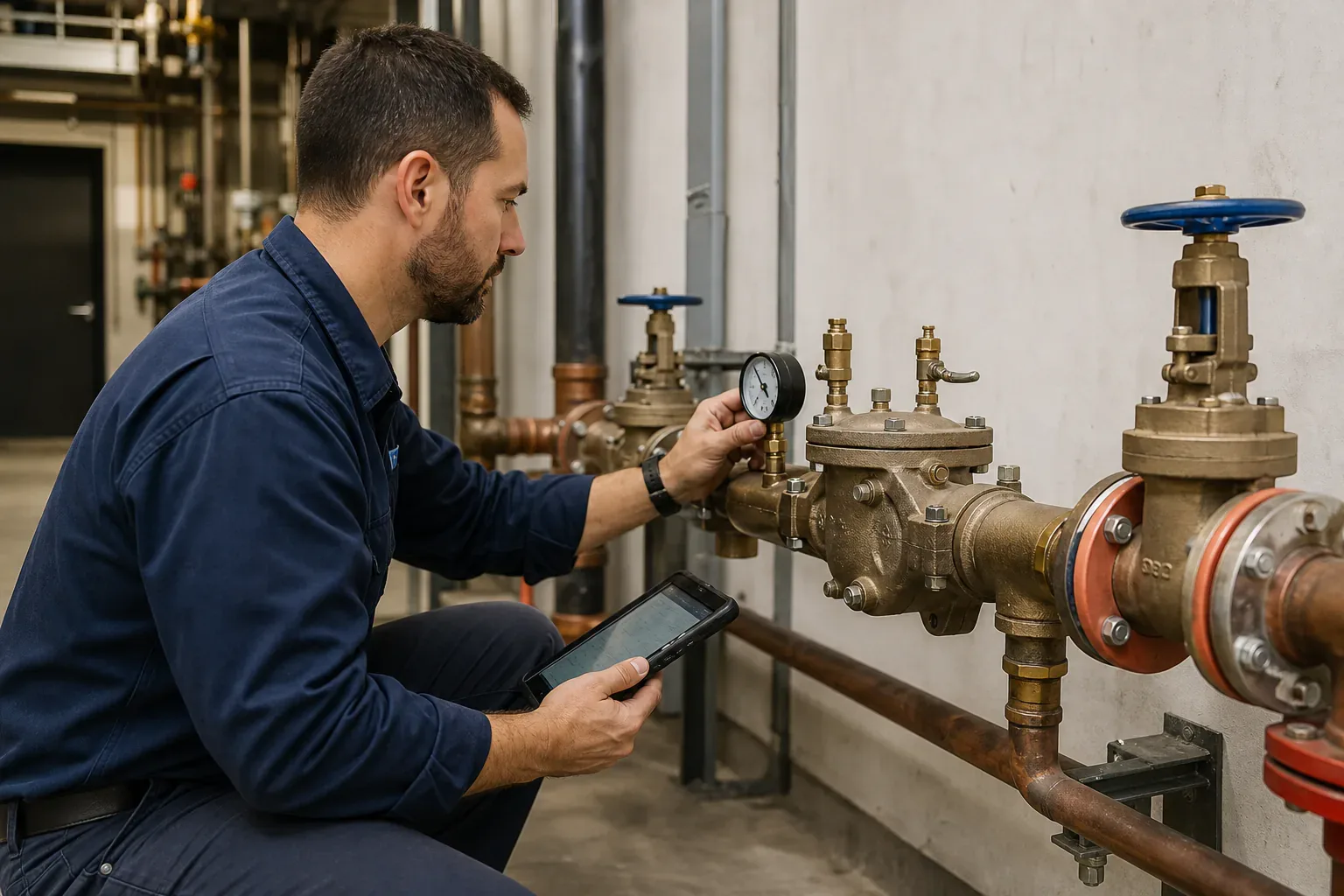
Plumbing failures are the fastest way a building problem becomes a tenant problem. A restroom out of order is visible to everyone by 9 a.m., and water in the wrong place damages more property per hour than almost anything else that can go wrong short of fire. Levaru runs the plumbing side of commercial buildings across Washington DC, Northern Virginia, and Maryland the same way we run every trade: a maintenance schedule instead of a call list, our own technicians on the recurring work, licensed plumbers managed under our supervision for regulated and specialty work, and every job photo-documented in your client portal.
The Recurring Work That Keeps Restrooms Off Your Phone
Most commercial plumbing volume is not dramatic. It is flush valves, faucet cartridges, running fixtures, slow drains, and water fountains — small work that determines whether tenants experience the building as maintained or neglected. Our technicians handle this layer on routine visits, and the boring discipline pays off twice: fixtures get rebuilt before they fail visibly, and a running flush valve gets caught before it quietly adds thousands of gallons to the water bill.
The scheduled layer sits underneath:
- Drain line jetting on lines with history — restaurant laterals, garage drains, the low spot every older building has — on a cycle, not after the backup
- Trap priming in mechanical rooms and janitor closets so sewer gas never becomes a tenant email
- Water heater inspection, flushing, and anode checks; commercial water heaters fail on a schedule you can either know about or be surprised by
- Sump and sewage ejector pump testing with float verification, because the pump that only matters during a storm is the one that must not fail during one
- Backflow preventer inventory and certified annual testing, filed with the utility as part of our compliance inspections calendar
- Winterization before the first freeze, and a spring walk of irrigation and exterior lines after it
Freeze, Flood, and the DMV Calendar
This region gives plumbing systems two hostile seasons. Winter delivers freeze events that find every un-insulated pipe above a loading dock and every sprinkler line in an unheated garage — and vacant suites, which freeze first because no one is there to feel it. Summer delivers the thunderstorms that test every sump pump and roof drain in the building within the same ten minutes. The buildings that survive both are the ones where somebody checked the heat trace in November and tested the sump floats in April, which is exactly what the preventive maintenance calendar is for.
Every plumbing emergency has a cheaper earlier version of itself. A burst pipe was insulation and heat trace. A flooded garage was a sump float test. A sewage backup was a jetting appointment.
Old Pipe Is a Fact of Life Here. Surprises Don’t Have to Be
A meaningful share of commercial buildings in DC, Alexandria, Arlington, and the older Maryland suburbs still run on original galvanized supply, cast iron stacks, or first-generation copper. Age shows up as pinhole leaks, chronic slow drains, and water pressure complaints. The wrong response is re-piping on speculation; the right one is evidence. Camera inspection of problem lines, documented leak history per riser, and pressure data turn “the pipes are old” into an actual capital decision — repair, reline, or replace — with the record to support it. When a repipe or riser project is the answer, it is scoped and managed as a proper project rather than an open-ended plumber engagement.
When Water Is Already Where It Shouldn’t Be
Burst supply line, failed water heater, sewage backup, storm intrusion: the first hour determines the size of the claim. Our 24/7 emergency response crews handle plumbing emergencies with the sequence that matters — stop the water, protect what is below it, then repair. Buildings on our program have a structural advantage in that first hour: we map and QR-tag shutoff valves during onboarding and pin them in the building’s 3D walkthrough, so the person responding knows where the main and the riser isolation valves are without hunting for a retired engineer’s knowledge at 2 a.m.
One Program Instead of a Plumber’s Phone Number
Licensed plumbing contractors perform the work the law reserves for them — gas lines, major waste and supply alterations, permit work — vetted and supervised by us inside the same work-order system as our own crews. You get one monthly report covering the routine layer, the scheduled layer, and the trade work, with photos in the client portal and history attached to every tagged asset. It is part of the same integrated facility management program that covers the rest of the building.
If you don’t currently know how many backflow assemblies your building has or when the water heaters were last flushed, that is a normal starting point. Request a proposal and the first thing we’ll do is walk the building and build the real inventory.
FAQ
Plumbing Services — common questions
What plumbing work does a commercial building actually need on a recurring basis?
Restroom fixture maintenance is the volume leader: flush valve rebuilds, faucet cartridges, running toilets, and clogs. Behind that sits the scheduled layer — drain line jetting on known trouble lines, water heater inspection and flushing, sump pump testing, backflow preventer annual testing, and winterization ahead of the first freeze. Buildings that only call a plumber when something backs up are paying emergency rates for maintenance-grade problems.
What is backflow testing and is my building required to do it?
A backflow preventer stops water from your building — irrigation lines, boilers, fire systems — from siphoning back into the public supply. Water utilities across the DMV, including DC Water, WSSC Water in suburban Maryland, and Virginia city and county utilities, require annual testing of these assemblies by certified testers, with results filed with the utility. Miss the deadline and the letters escalate toward fines or water shutoff. We track every assembly in the building and schedule the certified tests as part of the compliance calendar.
Why does part of my building smell like sewage?
The most common answer is a dry trap: a floor drain in a mechanical room, janitor closet, or little-used restroom whose water seal evaporated, letting sewer gas straight into the space. The fix costs nothing — prime the traps on a schedule. Other culprits are failed trap primers, blocked vent stacks, and cracked fittings. It is almost never necessary to live with the smell, and the diagnosis usually takes minutes for someone who knows the building.
How do you prevent frozen and burst pipes in commercial buildings?
Know where the vulnerable pipe is before December: sprinkler lines in unheated garages and attics, domestic lines in exterior walls and above loading docks, hose bibs, and rooftop equipment. Then act seasonally — insulate and heat-trace the known weak points, verify freeze stats and unit heaters work before the first hard night, drain and shut isolated exterior lines, and check vacant suites, which freeze first because nobody feels the cold. A burst pipe is a flood with a delay timer; prevention is dramatically cheaper than extraction and drywall.
How is commercial plumbing service priced?
The recurring layer — fixture maintenance, trap priming, inspections, winterization — is typically included in a monthly facility management scope sized to the building. Scheduled specialty work like jetting, water heater replacement, and backflow testing is priced per event or per asset. Repairs beyond the routine layer are quoted or handled at negotiated time-and-materials rates. What you should not be paying is after-hours emergency pricing for problems a schedule would have caught.
Next step
Tell us about your building. We'll show you what we'd do with it.
Curious how it works? See how our 3D walkthroughs work →