
Property Management
Multifamily Property Management in the DMV
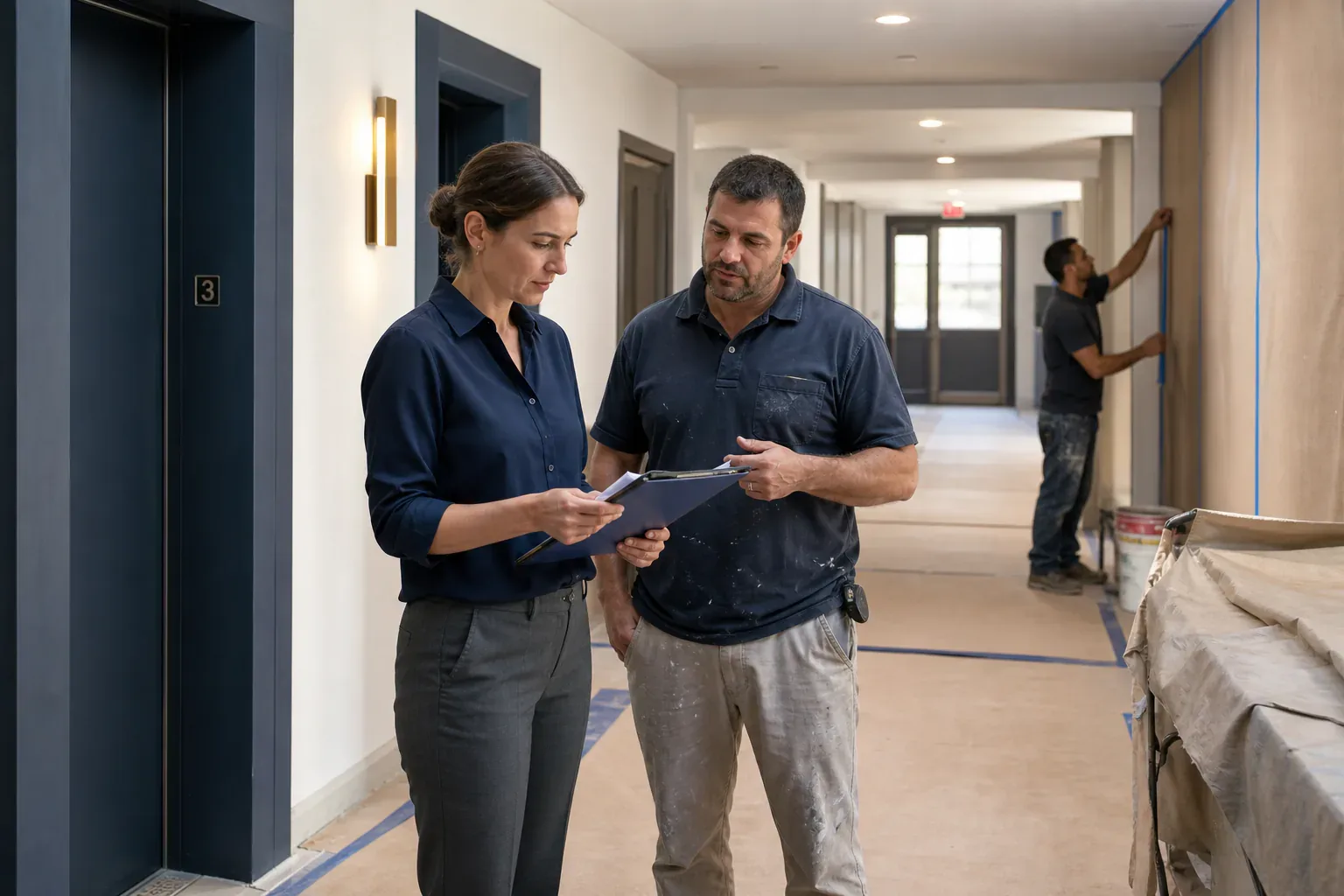
Multifamily is a different business from commercial property management, and pretending otherwise is how owners end up disappointed. The economics run on unit count rather than lease negotiation, the profit leaks through turnover rather than CAM disputes, and the tenant is a resident whose home you are responsible for, under residential rules that are far more protective than commercial ones. Levaru manages multifamily and apartment communities across Northern Virginia, Washington DC, and Maryland, backing every assignment with our own facility management crews so make-readies and emergency calls go to Levaru people rather than a vendor queue.
The operating goal is simple to state and hard to execute: keep the community full, keep good residents from leaving, and turn the units that do vacate fast and clean. Everything else serves those three numbers.
Unit economics: occupancy, turnover, and expense control
In commercial, a single lease can define a building’s income for a decade. In multifamily, income is the sum of many short leases, and it is decided every day by occupancy and turnover. A vacant unit is not a slow-moving line item; it is rent you lose permanently, one day at a time.
That reframes the whole job. Leasing velocity — how fast you fill a vacancy at the right rent — is a core operating metric, not a leasing-office afterthought. Turnover is the quiet profit killer, because every move-out triggers make-ready cost, downtime, and the expense of finding the next resident. And expense discipline on utilities, contracts, and maintenance decides whether strong rents actually reach the owner’s bottom line. We manage these as connected numbers: a community with healthy rents can still underperform if turns are slow and residents keep leaving.
In multifamily, retention is not a soft goal. Every resident who renews is a make-ready you did not pay for and a vacancy you did not carry.
Make-ready and maintenance response
Residents judge a community by how fast something gets fixed when they report it. Maintenance requests flow through the portal to our own crews on a documented response standard, and each one closes with photos — the same discipline we bring to commercial property management, applied to homes where the stakes feel personal.
Unit turns run as a checklist against a make-ready standard: inspect against the move-in condition, complete repairs, clean, and return the unit to rentable condition as quickly as quality allows. Turn time is lost rent measured in days, so it is tracked and managed, not left to drift. Because our crews handle the work, we control both the speed and the cost of a turn instead of waiting on a subcontractor’s schedule.
Resident service and retention
Most residents do not leave over rent; they leave over the experience of living there — slow maintenance, poor communication, a leasing office that treats them as a transaction. Retention in multifamily is the same operational discipline behind our tenant relations practice: fast documented responses, honest communication about timing, clean and safe common areas, and renewal conversations that start before the lease expires rather than after a resident has already toured somewhere else.
The math is unforgiving in the owner’s favor. The cost of retaining a resident is almost always a fraction of the cost of turning the unit and re-leasing it, so a community that keeps its residents outperforms one that constantly replaces them, even at similar rents.
Compliance: residential is a stricter rulebook
Residential property is heavily regulated, and the rules genuinely differ across the DMV. Virginia, Washington DC, and Maryland each carry their own landlord-tenant statutes, notice periods, and procedures, and DC is a notably tenant-protective jurisdiction. We manage each community to its local rulebook and apply fair-housing-consistent practices throughout leasing and resident interactions. When a situation calls for legal action or a judgment call on interpretation, we coordinate with the owner and qualified counsel rather than improvise — residential compliance mistakes are expensive and public, and avoiding them is part of the service.
The owner’s view
Multifamily owners get the same platform as every other Levaru client: photo-documented work orders, asset histories under QR tags, and browser-based 3D walkthroughs of common areas and building systems. The monthly owner package covers occupancy, leasing activity, delinquency, turn status, and the financial picture, built so an owner can answer any question about the community without a phone call. For an owner who does not live near the property, that visibility is the difference between trusting a report and verifying it.
Getting started
Takeover follows a fixed checklist scoped for residential: leases and resident ledgers, the make-ready and unit-condition baseline, vendor contracts, deposit accounting, and a first-90-days plan you approve before we execute. Transitions from another manager are routine, and we tell you plainly what we find.
If you own multifamily or apartment property in Northern Virginia, Washington DC, or Maryland, call +1 (703) 646-8300 or write info@levaru.co. We will walk the community, review the rent roll, and put a specific scope and fee in writing.
FAQ
Multifamily Property Management — common questions
How is multifamily management priced compared to commercial?
Multifamily is typically priced per unit per month rather than as a percentage of rent, because unit count predicts workload better than rent level does in residential. Larger communities that need on-site staff are structured differently from a scattered small portfolio a manager runs remotely. The fee moves with unit count, the age and condition of the community, whether on-site leasing and maintenance staff are required, and the service level the owner wants. We quote after seeing the property and the rent roll, not from a rate card, because a 12-unit building and a 200-unit community are different businesses.
What drives profitability in a multifamily community?
Three levers, roughly in order: occupancy, turnover cost, and expense control. Every vacant day is lost income you never recover, so leasing velocity and renewals matter enormously. Turnover is the quiet profit killer — every move-out means make-ready cost, downtime, and leasing expense, so keeping good residents is cheaper than replacing them. Then comes disciplined expense management on utilities, maintenance, and contracts. A community can have strong rents and still underperform if turns are slow and residents leave. We manage all three as connected numbers, not separate line items.
How do you handle maintenance requests and unit turns?
Resident maintenance requests go through the portal and to our own crews on a documented response standard, with photos on completion — the same system we use for commercial buildings. Turns are run as a checklist against a make-ready standard so a vacated unit is inspected, repaired, cleaned, and re-rented as fast as quality allows, because turn time is directly lost rent. Because Levaru operates its own facility management division, make-ready work and emergency calls go to our people rather than waiting in a vendor queue.
How do you handle fair housing and landlord-tenant compliance?
Residential is more heavily regulated than commercial, and the rules differ by jurisdiction across Virginia, Washington DC, and Maryland — each has its own landlord-tenant statutes, notice requirements, and procedures, and DC in particular is a notably tenant-protective environment. We manage to the local rulebook for each community and apply fair-housing-consistent practices across leasing and resident interactions. Where a matter calls for legal action or interpretation, we coordinate with the owner and qualified counsel rather than improvising, because compliance mistakes in residential are costly and public.
Do you manage smaller multifamily buildings?
Yes. We manage multifamily across a range of sizes, from smaller buildings run without dedicated on-site staff to larger communities that need it, throughout the DMV. Smaller assets are usually managed remotely with our crews handling maintenance and turns, while larger communities may justify on-site leasing and service staff. The right structure depends on unit count, location, and the owner's goals, which is part of what we scope before quoting.
Next step
Tell us about your building. We'll show you what we'd do with it.
Curious how it works? See how our 3D walkthroughs work →