
Industry
Facility Management for Schools & Education Buildings
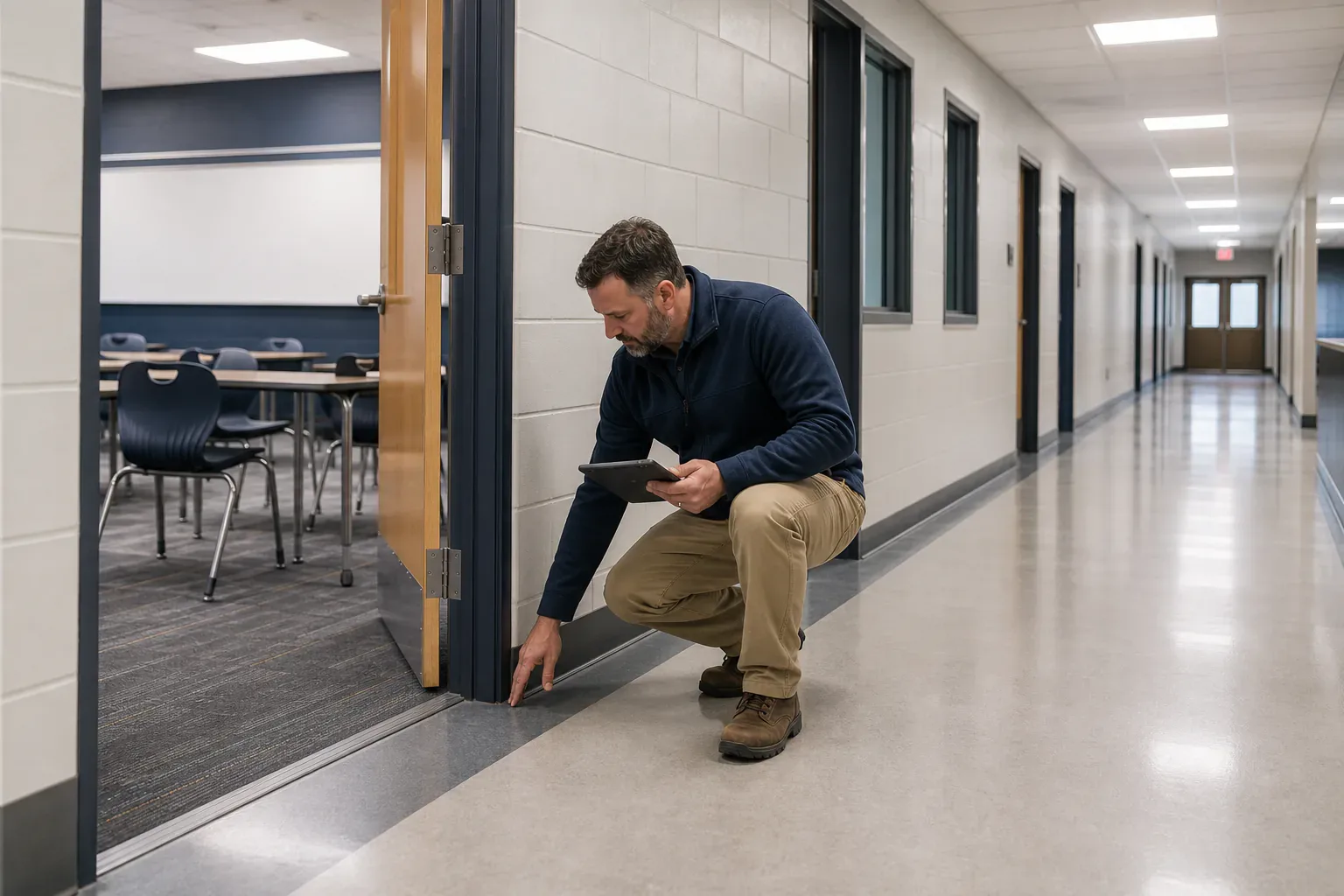
A school building is judged by the most attentive audience a facility can have: parents deciding whether their child is safe here, students who spend every weekday inside it, and staff who cannot teach through a broken boiler. Two things run everything — student safety and the academic calendar — and neither bends to a maintenance schedule that was convenient for the contractor. Levaru provides facility management for schools and education buildings across the DMV: independent and private schools, charter schools, early-childhood centers, and standalone campus buildings in Virginia, Washington DC, and Maryland.
We are a facility management and commercial real estate firm headquartered in Alexandria. We run the building so educators can run the school: HVAC, janitorial, grounds, preventive maintenance, security coordination, and 24/7 emergency response, all documented on our own platform.
The academic calendar decides everything
In most commercial buildings you fix things when they break. In a school you fix them when the students are gone. Disruptive work waits for summer, winter, and spring breaks; in-term repairs are scheduled for evenings, weekends, and non-instructional hours wherever the failure allows.
Summer is the build window, and it is short. Deferred repairs, preventive maintenance catch-up, floor refinishing, painting, and system overhauls all compete for the same ten or twelve weeks. We plan the summer against the last day of class and hold it to the first day back, because a project that slips into September is a project that happens around children.
A school has two seasons: in session, when almost nothing invasive can happen, and out of session, when everything has to. The whole job is fitting a year of building work into the weeks the students are away.
Classroom comfort and air quality
HVAC is the system a school notices first. Classrooms are crowded, occupancy swings by the period, and a room that is too hot or too stuffy takes the afternoon down with it. Our HVAC maintenance program treats occupied instructional space as priority zones: filters changed and documented, coils kept clean, controls actually calibrated, and ventilation checked against how the rooms are really used rather than how the original drawings imagined them. When a school adds a computer lab or converts a room, we reassess the load instead of waiting for the complaint.
Cleaning that keeps a building of children healthy
Illness moves through a school faster than through any office, and the building’s cleaning program is the first line against it. Our janitorial teams run on inspection scoring, not assumption: high-touch surfaces, restrooms, cafeterias, and shared spaces cleaned to a written scope, supervised, and scored, with recurring misses surfacing in the data before they surface in a nurse’s office.
Where a school’s health policy calls for a specific disinfection standard, we meet it. And we are clear about the boundary — classroom and specialty-space protocols set by the school’s own staff stay with the school; what the building provides is consistent, health-aware cleaning of everything the students share.
Safety, access, and screened crews
Nothing about a school matters more than keeping the people who work in it accountable and the building secure. Anyone assigned to an occupied school works to that school’s background-check and screening requirements, signs in through administration, and stays within supervised zones. We coordinate security and access systems — door hardware, controlled entries, and the alarms and cameras the school operates — while the security policy itself stays where it belongs, with the school’s leadership.
Grounds and play areas get the same safety lens: walkways cleared and de-iced, playground surfaces and equipment inspected, athletic and drop-off areas kept safe for the crowds that use them twice a day.
One manager instead of a binder of vendors
Most schools run facilities on a thin staff and a thick binder of single-trade vendors — one number for HVAC, another for the boiler, a third for the fire alarm — with a business manager holding it together between everything else the job asks of them. Levaru consolidates the daily operation under one accountable manager and one system of record. The routine work is self-performed by our crews; licensed and specialized trades — electrical, plumbing, fire and life-safety, elevators — are managed under supervision, with their credentials and inspection dates tracked in the same place as the work. Nothing regulated is left to a vendor nobody is checking on, and no repair falls through the gap between two contractors who each assumed the other had it.
Records for boards, licensing, and accreditation
Schools answer to boards, licensing agencies, and accreditors, and building records get pulled into all three — HVAC and filter logs, fire and life-safety inspections, pest control, and water testing. Every Levaru building runs on our CMMS platform, where each work order is photo-verified, time-stamped, and tied to a QR-tagged asset, so a business manager preparing for a licensing visit exports the proof instead of reconstructing it.
If you run a private, charter, or independent school building in Virginia, DC, or Maryland, request a proposal. We will walk the campus, map the work to your calendar, and scope a program that keeps the building ready for the students without interrupting them.
FAQ
Education & Schools — common questions
What kinds of schools and education buildings do you manage?
Independent and private schools, charter schools, early-childhood and daycare centers, tutoring and training centers, and standalone buildings on college and university campuses across the DMV. We manage the building — HVAC, cleaning, grounds, maintenance, and safety systems — so the staff can run the education. We are not a substitute for a school's own faculty or its required student-safety programs.
How do you schedule work around the academic calendar?
The calendar drives the plan. Disruptive and capital work is pushed to summer, winter, and spring breaks, and in-term work is scheduled for evenings, weekends, and non-instructional hours wherever the repair allows. Summer is the build window, so we map turnover projects against the last day of class and hold the schedule to the first day back.
Are your crews screened to work in occupied school buildings?
Yes. Anyone assigned to an occupied school works to that school's screening and background-check requirements, and we coordinate access, sign-in, and supervised-zone rules with administration before the first visit. Where a jurisdiction or a school's policy sets a specific standard, we meet it rather than substitute our own.
Can you handle indoor air quality concerns in classrooms?
Classroom air quality is a maintenance discipline: filters changed on schedule and documented, coils and controls kept in working order, and ventilation checked against how the rooms are actually used. Crowded rooms and packed schedules push HVAC harder than the original design assumed, so we reassess load when a school reconfigures space instead of waiting for complaints.
Which areas do you serve?
Virginia, Washington DC, and Maryland, from our headquarters in Alexandria. Primary coverage includes Alexandria, Arlington, Fairfax, Tysons, Washington DC, Bethesda, Rockville, and Baltimore, with service across the broader DMV. Call +1 (703) 646-8300 or email info@levaru.co to confirm coverage for a specific school.
Next step
Tell us about your building. We'll show you what we'd do with it.
Curious how it works? See how our 3D walkthroughs work →