
Facility Management
Commercial Pest Control in the DMV
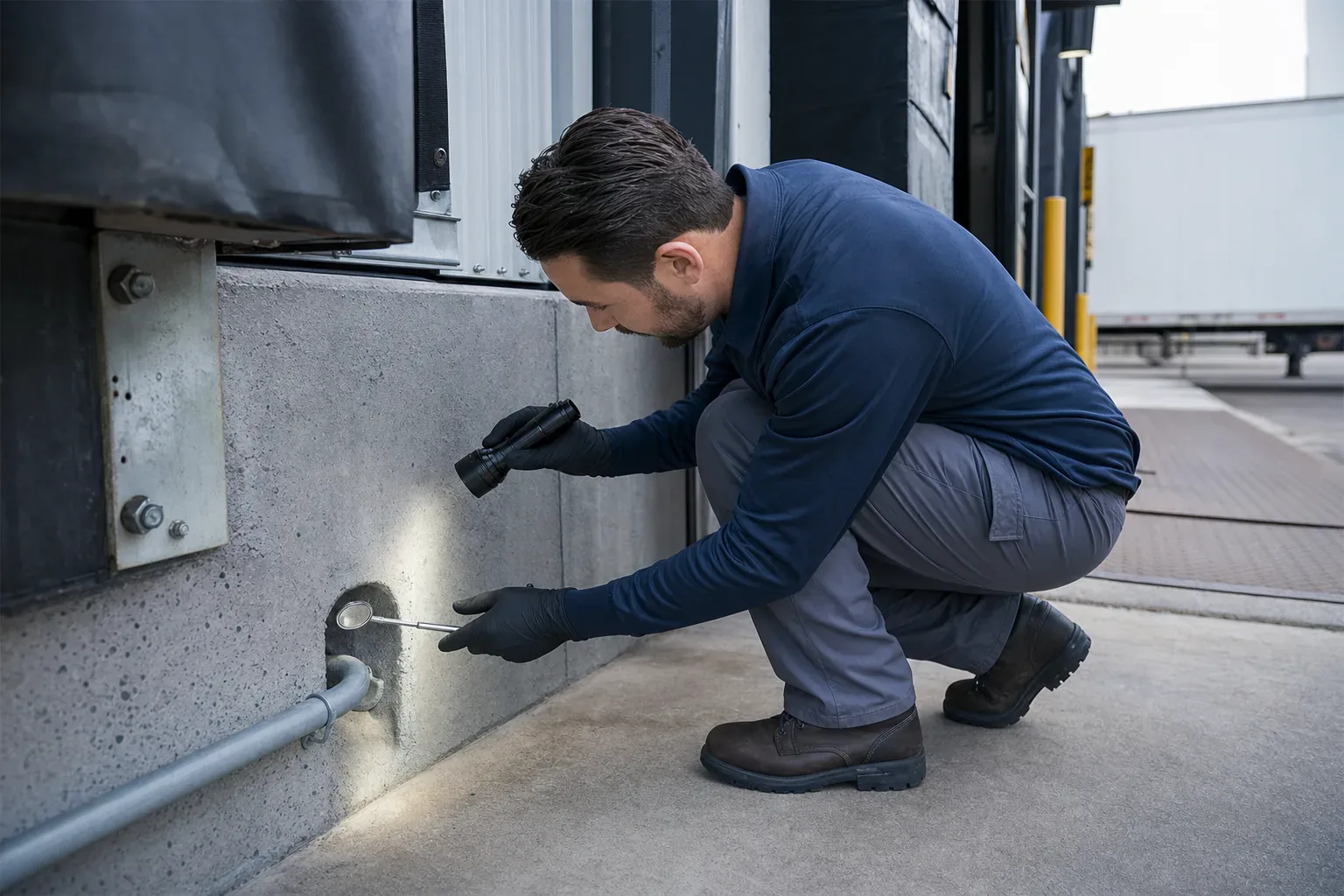
Pests are a building problem before they are a bug problem. Rodents come in through the gap under the dock door, roaches ride in with deliveries and stay for the grease under a tenant’s line, and by the time anyone files a complaint the population is established. Levaru runs pest control for commercial buildings across Washington DC, Northern Virginia, and Maryland as an integrated pest management program inside our broader facility management operation — inspection, exclusion, and sanitation run by the people who already maintain the building, with licensed pest professionals handling monitoring and treatment under our supervision, and every finding documented in your client portal.
Integrated Pest Management, Actually Practiced
IPM is widely claimed and rarely run. The genuine article has four legs, in priority order:
- Inspection and monitoring — scheduled walks of the pressure points (trash rooms, docks, mechanical spaces, food-service areas) plus monitoring stations that show what is active before anyone sees it in a hallway
- Exclusion — sealing the building: door sweeps and dock seals, utility penetrations fire-stopped and rodent-proofed, gaps at grade closed. This is maintenance work, and it is where a facility manager running pest control has a structural advantage — our technicians close exclusion findings as ordinary work orders instead of leaving them in a pest vendor’s report nobody actions
- Sanitation — removing what pests came for: trash room and compactor discipline, grease management, drain care in food-service areas, coordinated with the janitorial program that already owns those spaces nightly
- Targeted treatment — licensed applicators using enclosed stations and precision baiting where monitoring shows activity, logged per application, instead of calendar spraying occupied space
The order is the point. A sealed, clean building needs remarkably little chemistry.
The pest vendor’s report says “recommend sealing gap at loading dock” every month for a year. Nobody at a pest company owns a door sweep. In our program, that finding is a work order with a completion photo — and next month’s report stops saying it.
Rodents: The Region’s Signature Pest Pressure
The DC area consistently ranks among the worst rodent markets in the country, and commercial buildings absorb that pressure directly: rats working dumpster corrals and grade-level gaps, mice moving indoors every fall, and construction next door reshuffling established colonies into your block. The buildings that stay clean are not the lucky ones — they are the sealed ones with disciplined trash handling and monitoring that catches incursions in week one instead of month six. Grounds conditions feed the same fight: harborage in overgrown plantings and debris against the building line is a landscaping and grounds finding with pest consequences.
The DMV Pest Calendar
Pressure here is seasonal, and the program anticipates rather than reacts. Late winter into spring brings termite swarm season — worth knowing that a swarm indoors is a structural finding, not a nuisance — along with the first ant trails as ground temperatures rise. Summer belongs to the exterior: wasps nesting at rooflines and docks, mosquitoes wherever site drainage leaves standing water (a finding we route to the grounds crew, since the fix is drainage, not spray), and flies wherever refuse discipline slips. Fall is the rodent migration indoors, the season exclusion work pays for itself in a single month. Winter concentrates everything into the heated spaces — roaches in food-service areas, mice in ceiling plenums and mechanical rooms. Monitoring cadence and inspection focus shift with that calendar, which is the difference between a program and a subscription.
Multi-Tenant Buildings: One Tenant’s Problem Is Everyone’s Problem
Pests are the least respectful of lease boundaries. One food-service tenant’s grease discipline, one hoarder suite, one propped dock door — and the neighbors are filing complaints while the source tenant says nothing is wrong. Managing pests in a multi-tenant building is therefore partly a management job: service logs that show which spaces were inspected and what was found, lease-backed authority to address a tenant-caused source, tenant communication that is factual rather than alarming, and documentation for the food-service tenants whose health inspections depend on it. That documentation lives in the portal — service dates, findings, corrective actions, application logs — retrievable when the health inspector, a prospective tenant, or a buyer’s due-diligence team asks.
Licensed Where the Law Requires, Integrated Where It Counts
Pesticide application is regulated work — Virginia, Maryland, and DC each require licensed, registered applicators — so treatment is performed by licensed pest professionals we vet, schedule, and supervise. Everything around the treatment is building operations: the exclusion carpentry, the sanitation standards, the monitoring walks, the tenant coordination. Splitting those across an unmanaged vendor and an uninvolved building staff is why most commercial pest programs tread water. Running them as one program, with findings feeding the same preventive maintenance system as every other trade, is why ours don’t.
If your current pest control is a monthly invoice, a bait station map nobody has audited, and the same recommendation appearing in twelve consecutive reports, that is a normal starting point. Request a proposal and we’ll start with an inspection of the building the way a rat sees it: every gap, every penetration, every unswept corner.
FAQ
Pest Control — common questions
What is integrated pest management (IPM)?
A program built on the fact that pests need food, water, and a way in — and that controlling those beats spraying for what got through. IPM in practice: regular inspection with monitoring stations, exclusion work that physically seals entry points, sanitation fixes that remove food and harborage, and targeted treatment by licensed applicators only where monitoring shows activity. It outperforms calendar spraying on results and uses far less pesticide in occupied buildings, which is why it is the standard for commercial properties.
Why do commercial buildings in the DC area have such persistent rodent problems?
Density, age, and construction. The region has one of the country's heaviest urban rat populations, older buildings offer decades of accumulated gaps and utility penetrations, and constant construction keeps displacing established colonies into neighboring blocks. Mice surge indoors every fall when temperatures drop. None of this makes rodents inevitable — it makes exclusion and sanitation non-optional. Buildings that rely on bait alone are managing the population, not the problem.
Are pest treatments safe for building occupants?
Run correctly, yes. Pesticide application in commercial buildings is performed by licensed, registered applicators — required by Virginia, Maryland, and DC — using targeted, low-impact methods: gel baits and enclosed stations rather than broadcast spraying, applied where occupants and pets are not. Scheduling matters too: treatments in occupied spaces happen after hours with appropriate re-entry windows, and every product application is logged. An IPM program's first goal is needing less treatment in the first place.
What do food-service and restaurant tenants need to know about pest control?
Their health inspections are your building's problem. A restaurant tenant's pest violation reflects on the property, drives complaints from neighboring tenants, and can migrate — roaches and rodents do not respect demising walls. Food-service spaces need service on a tighter cycle, documented logs available for the health inspector, grease and refuse discipline coordinated with the hauler, and lease language that lets the landlord act when a tenant's sanitation is the source. We run all four as one program.
How much does commercial pest control cost, and how often is service needed?
Most commercial buildings run monthly service, with food-service areas and trash rooms on shorter cycles and low-risk suites quarterly. Pricing follows building size, tenant mix, and pressure — a mixed-use property with restaurants costs more to keep clean than a suburban office building. Exclusion repairs are one-time work orders, and they are the spend that reduces every future bill. The expensive version of pest control is the reactive one: a tenant complaint, an emergency treatment, and a reputation problem in one invoice.
Next step
Tell us about your building. We'll show you what we'd do with it.
Curious how it works? See how our 3D walkthroughs work →