
Industry
Facility & Property Management for Multifamily Communities
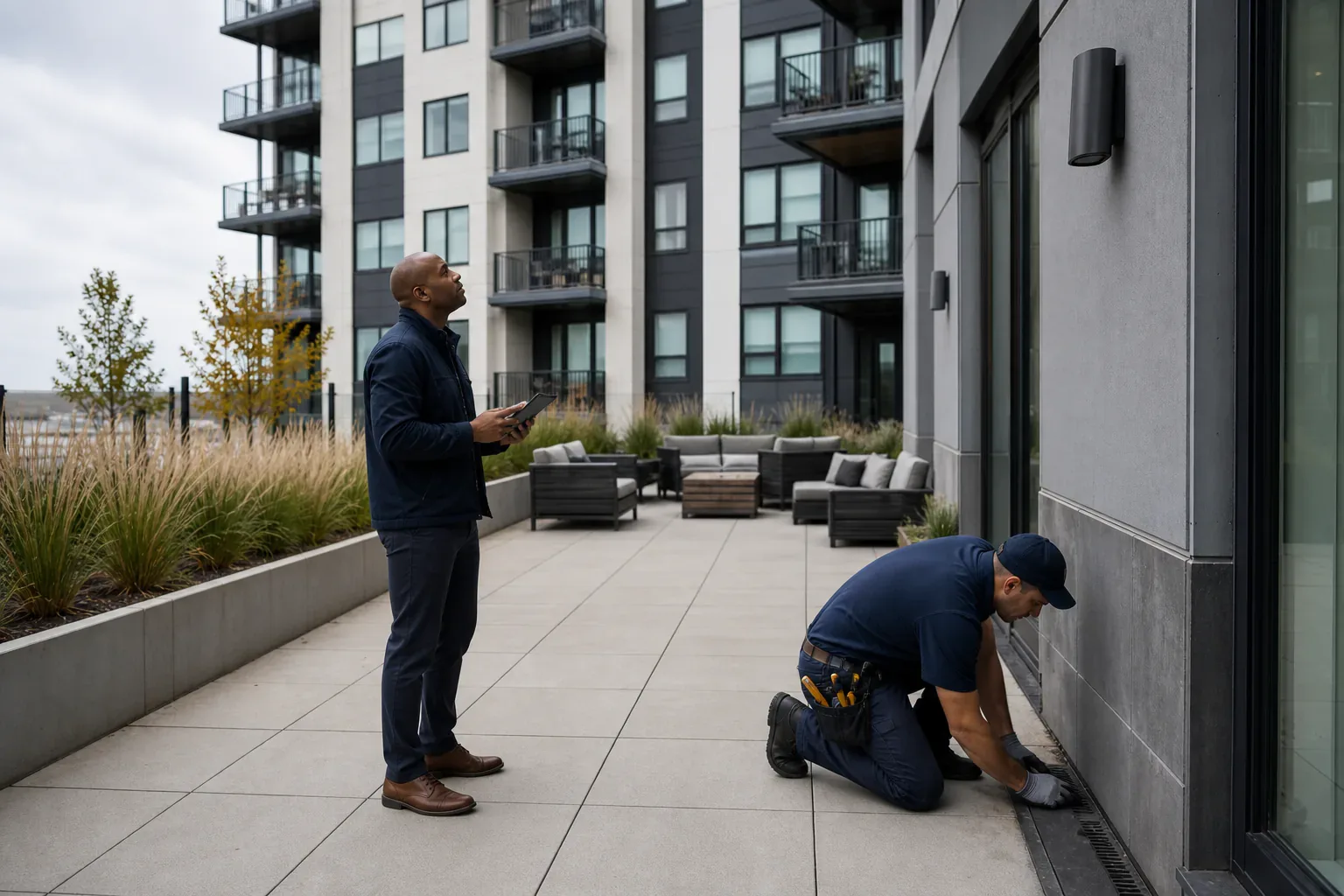
A residential building is somebody’s home, and that changes everything about how it has to be run. An office tenant goes home at six; a resident is there at 2 a.m. when the heat dies in January, and in the DMV that failure is not just a bad night — it is a legal clock the owner is now on. Levaru provides facility and property management for multifamily and residential communities across the DMV: apartment communities, condominium associations, and mixed-use buildings in Virginia, Washington DC, and Maryland.
We are a facility management and commercial real estate firm headquartered in Alexandria. We run the daily operation — maintenance, grounds, amenities, common areas, and resident response — around one fact office buildings never have to reckon with: people live here, and the building can never really close.
Resident response is a habitability obligation
When a resident reports no heat, no hot water, a major leak, or a security-critical lock failure, the response is not a customer-service nicety — it is a habitability duty with a deadline attached in every DMV jurisdiction. Those requests run on a 24/7 emergency response line with a same-night response, tracked from the moment they come in.
Routine requests get the discipline too. They are triaged, scheduled, and visible to the resident, so “did anyone even read my request?” stops being the sentiment that drives a non-renewal. Every request and its resolution live on our platform, photo-verified, which is what turns a maintenance operation residents distrust into one they can see working.
In multifamily, your maintenance response time is your resident-retention strategy whether you manage it that way or not. Residents forgive a lot, but they do not forgive a cold apartment nobody answered for two days.
Turns are where the money is
A vacant unit earns nothing, and a slow make-ready is one of the most expensive habits in multifamily. We run turns as a tracked process, not a scramble: move-out inspection, scoped punch list, paint, repairs, cleaning, and re-key, each step logged and photographed. The owner sees exactly where every unit stands and how long turns are really taking, so a unit that has sat empty for three weeks becomes a question with an answer instead of a line on a vacancy report.
Preventive maintenance is the other half of the economics. Water heaters, HVAC, and common building systems worked on a schedule mean fewer 2 a.m. calls, fewer emergency premiums, and equipment that reaches the end of its real life instead of failing early.
Amenities and common areas earn the renewal
Prospects tour the amenities and residents renew for them: the lobby, the fitness room, the pool, the package room, the courtyard. Those spaces are held to a written standard and walked on a schedule, not maintained only when something breaks. Janitorial runs on inspection scoring; landscaping and grounds and snow removal keep the approach and the walkways safe and sharp through every DMV season, because the first thing a prospect and a resident both see is the way in.
The licensed specialty work amenities require — certified pool operation, elevators, fire systems — is handled by the qualified vendors that scope demands, managed under our supervision with their certifications and inspection dates tracked in the same system as everything else.
Working with owners and boards
Apartment owners and condominium boards want different things from a manager, and we scope to each. For rental communities, the emphasis is turns, retention, and protecting asset value. For associations, it is transparent budgets, reserve-aware planning, and a manager who works with the board the residents elected rather than around it. In both cases the deliverable is the same: one accountable partner and one honest record.
Protecting the asset over the long term
Multifamily is a long hold, and the buildings that keep their value are the ones maintained on a plan instead of a crisis. We track the condition and remaining life of the major systems — roofs, boilers, HVAC, elevators — so an owner or an association board can budget for the next big expense before it arrives as an emergency assessment. For associations, that feeds reserve planning with real numbers from the actual equipment on site rather than a formula; for owners, it protects net operating income and the value of the asset at sale. Either way, the capital decisions get made with data instead of dread, and the surprises that blow up a residential budget get smaller and rarer.
A record owners and residents can both see
Every Levaru building runs on our CMMS platform, where each work order is time-stamped, photo-verified, and tied to a QR-tagged asset. Owners get proof of what was maintained, when, and at what cost for lenders, insurers, and reserve studies; residents get a request that they can watch move from reported to resolved. The same record settles the disputes that used to come down to one person’s word against another’s.
If you own or govern an apartment community or condominium in Virginia, DC, or Maryland, request a proposal. We will walk the property, review how your turns and resident requests are running today, and scope a program that protects both the asset and the people who live in it.
FAQ
Multifamily & Residential — common questions
What kinds of residential communities do you manage?
Apartment communities, condominium associations, and mixed-use buildings with a residential component across the DMV. We handle the building systems, common areas, amenities, grounds, and maintenance operation; where an association needs full property management, we coordinate with the board and manager rather than replace the governance the residents elected.
How fast do you respond to after-hours resident emergencies?
Habitability emergencies — no heat, no hot water, a major leak, a lockout risk — run on a 24/7 line with a same-night response, because in the DMV those are not just service issues, they are legal obligations with clocks attached. Routine requests are triaged and scheduled, and residents see the status of their request rather than wondering whether anyone read it.
Can you speed up unit turns and make-readies?
Yes. Turns are where multifamily revenue is won or lost, so we run them as a tracked process: move-out inspection, scope, the punch of paint, repairs, cleaning, and re-key, with each step logged and photographed. The owner sees where every unit stands and how long turns are actually taking, instead of guessing why a vacant unit is still not leased.
Do you handle amenities like pools, fitness rooms, and common areas?
We keep them clean, safe, and inspection-ready, and we coordinate the licensed specialty vendors that amenities require — certified pool operators, elevator contractors, fire-system testers — under our supervision. Amenities are what a prospect tours and what a resident renews for, so they are held to a written standard, not maintained only when something breaks.
Which areas do you serve?
Virginia, Washington DC, and Maryland, from our headquarters in Alexandria. Primary coverage includes Alexandria, Arlington, Fairfax, Tysons, Washington DC, Bethesda, Rockville, and Baltimore, with service across the broader DMV. Call +1 (703) 646-8300 or email info@levaru.co to confirm coverage for a specific community.
Next step
Tell us about your building. We'll show you what we'd do with it.
Curious how it works? See how our 3D walkthroughs work →