
Energy & Sustainability
EV Charging Readiness for Commercial Buildings
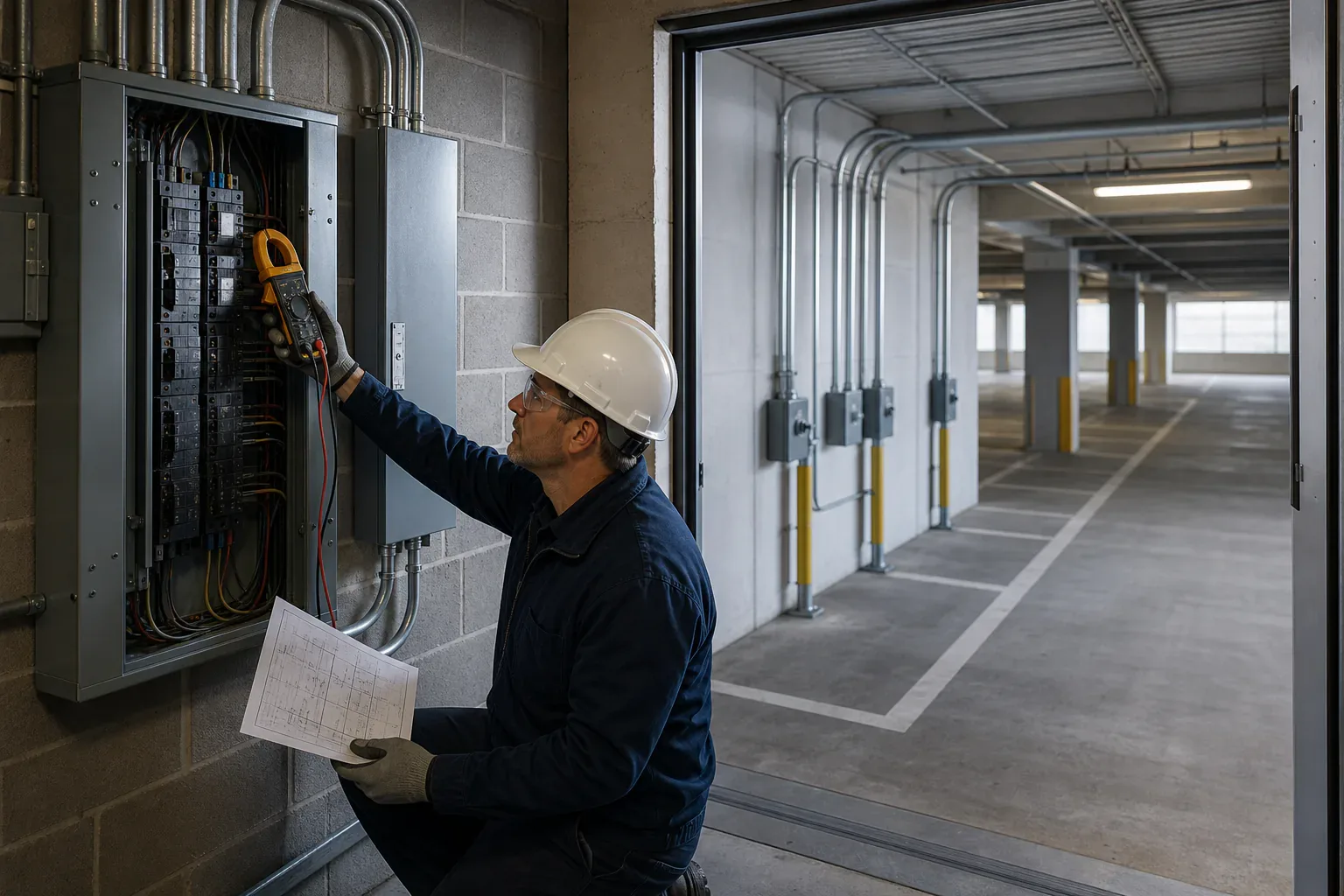
Tenant and employee demand for workplace EV charging is climbing across the DMV, and some jurisdictions have begun nudging commercial properties toward EV readiness. The instinct is to price chargers. The right first move is to price capacity. Levaru plans and manages EV charging readiness for commercial buildings across Washington DC, Northern Virginia, and Maryland as part of our energy and sustainability practice — capacity-first, demand-charge-aware, and built to expand.
The core discipline is simple to state and easy to skip: the building’s spare electrical capacity, not the charger you liked in a brochure, determines what is actually feasible. Start there and the project works; start with the hardware and you discover the constraints after you have spent money.
The electrical capacity study comes first
Before anyone talks about how many stalls or which charger, we answer what the building can actually support. An electrical capacity study reads your service size, panel and feeder loading, and the genuine spare capacity left after the building’s existing demand. Level 2 chargers draw meaningfully; DC fast chargers draw far more. Most buildings can support more charging than owners fear and fewer chargers at full simultaneous power than vendors imply — and the gap between those two facts is exactly what planning is for.
The study produces a straight answer: how many chargers at what power the building supports today, what it would take to expand that, and whether a service upgrade is on the table or off it. That is a very different starting point from a charger quote, and it is the difference between an amenity that works and a breaker that trips on a Monday morning.
Demand charges: the cost nobody quotes
The bill surprise in commercial EV charging is almost never the energy. It is the demand charge — the utility’s charge for your highest rate of use during the billing period, measured over short intervals and billed separately from total consumption. A bank of chargers all pulling at once can set a new building peak that raises that charge every single month, whether or not the vehicles used much energy.
A row of chargers energizing together at 8 a.m. can reset your building’s demand charge for the month. The fix is not fewer chargers; it is chargers that share capacity instead of racing for it.
The answer is load management: charging equipment and controls that stagger and throttle sessions so vehicles share the available capacity intelligently rather than spiking together. Done right, load management lets a building serve more vehicles on the same electrical service without buying a demand-charge increase every month. We model this in planning, using the same interval-data literacy behind our energy management practice, so the operating cost of the chargers is a number you saw coming.
Make-ready: pay for the path once
The expensive part of EV charging is rarely the charger on the wall. It is the path to the parking space — the capacity, conduit, and wiring runs across a lot or through a garage. Make-ready is installing that infrastructure ahead of demand, sized so that adding or expanding chargers later is a mounting-and-connection job instead of a fresh excavation.
The economics are decisive: building make-ready during other electrical work, a resurfacing, or a garage project costs a fraction of opening the same lot twice. So even owners not ready to install many chargers today are often right to install the make-ready now, especially where a jurisdiction’s readiness expectations are trending in one direction. We scope make-ready to a realistic future stall count, not just today’s, so the second phase is cheap by design.
Licensed installation, managed as one program
Here we are precise about the line, the same way we are across our electrical services program. The electrical installation — new circuits, panel work, any service upgrade, and the charger connections themselves — is licensed electrical work and must be performed by licensed electricians. That is not negotiable and we do not blur it.
What Levaru provides is the program wrapped around that work: the capacity study, load-management design, demand-charge analysis, siting, incentive coordination, and project management, with licensed electrical contractors vetted, scheduled, and supervised by us and working from the same work-order system as our own crews. You manage one relationship and hold one company accountable; the licensed trade work is done by the people legally required to do it, documented in your client portal with the rest of the building’s record. Installation runs as a scoped construction project through our projects and construction practice like any other capital work.
Incentives, checked at planning time
Make-ready and charger incentive programs come and go across the DMV’s utilities and jurisdictions, with shifting funding and terms. Rather than promise a specific program that may have closed, we check what is actually available for your utility territory and jurisdiction as part of planning, and fold any live make-ready or equipment incentives into the project economics. The design goal is a project positioned to capture an incentive if one exists — not one that assumes an incentive that does not.
EV charging readiness is one line of Levaru’s energy and sustainability practice, and it connects directly to our energy management and electrical programs. If your tenants are asking for charging, or your jurisdiction is pointing that way, we will start with a capacity study and a demand-charge picture before anyone quotes hardware. Request a proposal or call +1 (703) 646-8300.
FAQ
EV Charging — common questions
How many EV chargers can my building support?
That is an electrical question before it is a charger question, and it is answered by a capacity study, not a catalog. The study looks at your service size, existing panel and feeder loading, and how much spare capacity is genuinely available after the building's current demand. Level 2 chargers draw meaningfully, and DC fast chargers draw far more, so the honest answer is often "fewer at full power than you hoped, or more if we stage and manage the load." We give you the real number and the options to expand it, rather than a charger count that trips a breaker on day one.
What are demand charges and why do they matter for EV charging?
Demand charges bill you for your highest rate of electricity use during the billing period, measured in kilowatts over short intervals, separately from total energy consumed. A bank of chargers all pulling at once can create a new building peak that raises this charge every month, even if the energy used is modest. That is why load management matters: staggering and throttling charging so vehicles share available capacity keeps the chargers from setting a costly new peak. Ignoring demand charges is how a "free" amenity turns into an ugly monthly surprise on the utility bill.
What does EV make-ready mean?
Make-ready is the electrical infrastructure installed ahead of the chargers themselves: the capacity, conduit, and wiring runs to the parking spaces, sized so that adding or expanding chargers later is a mounting-and-connection job rather than a fresh trenching and panel project. Building make-ready during other electrical or parking work is dramatically cheaper than opening a lot twice. It is the single most cost-effective EV decision most owners can make, because the expensive part of charging is almost always the path to the parking space, not the charger on the wall.
Can a facility company install EV chargers, or do I need a licensed electrician?
The electrical installation — new circuits, panel work, service upgrades, and the charger connections themselves — is licensed electrical work and must be done by licensed electricians, full stop. What Levaru provides is the program around it: the capacity study, load-management design, demand-charge analysis, siting, incentive coordination, and project management, with licensed electrical contractors vetted, scheduled, and supervised under our electrical services program. You get one accountable point of contact and one work-order record, and the licensed trade work is performed by the people legally required to perform it.
Are there incentives for commercial EV charging in the DMV?
Utility and jurisdictional make-ready and charger incentive programs appear and change across DC, Maryland, and Virginia, and availability, funding, and terms shift over time. Rather than quote a specific program that may have closed by the time you read this, we check what is currently offered for your building's utility territory and jurisdiction as part of planning, and fold any live make-ready or equipment incentives into the project economics. The point is to design the project so it can capture an incentive if one exists, not to assume one does.
Next step
Tell us about your building. We'll show you what we'd do with it.
Curious how it works? See how our 3D walkthroughs work →